Model Presentations

AI models and agentic systems for climate, water, and smart agriculture.

Selected model presentations, dashboard links, and workflow diagrams from publications and the K-WaterGuard AI Agent, designed for collaborators, students, research groups, and climate-tech partners.

Publication-based AI model portfolio

01

Seasonal WaveNet-LSTM

Hybrid deep learning framework for precipitation forecasting with integrated large-scale climate drivers.
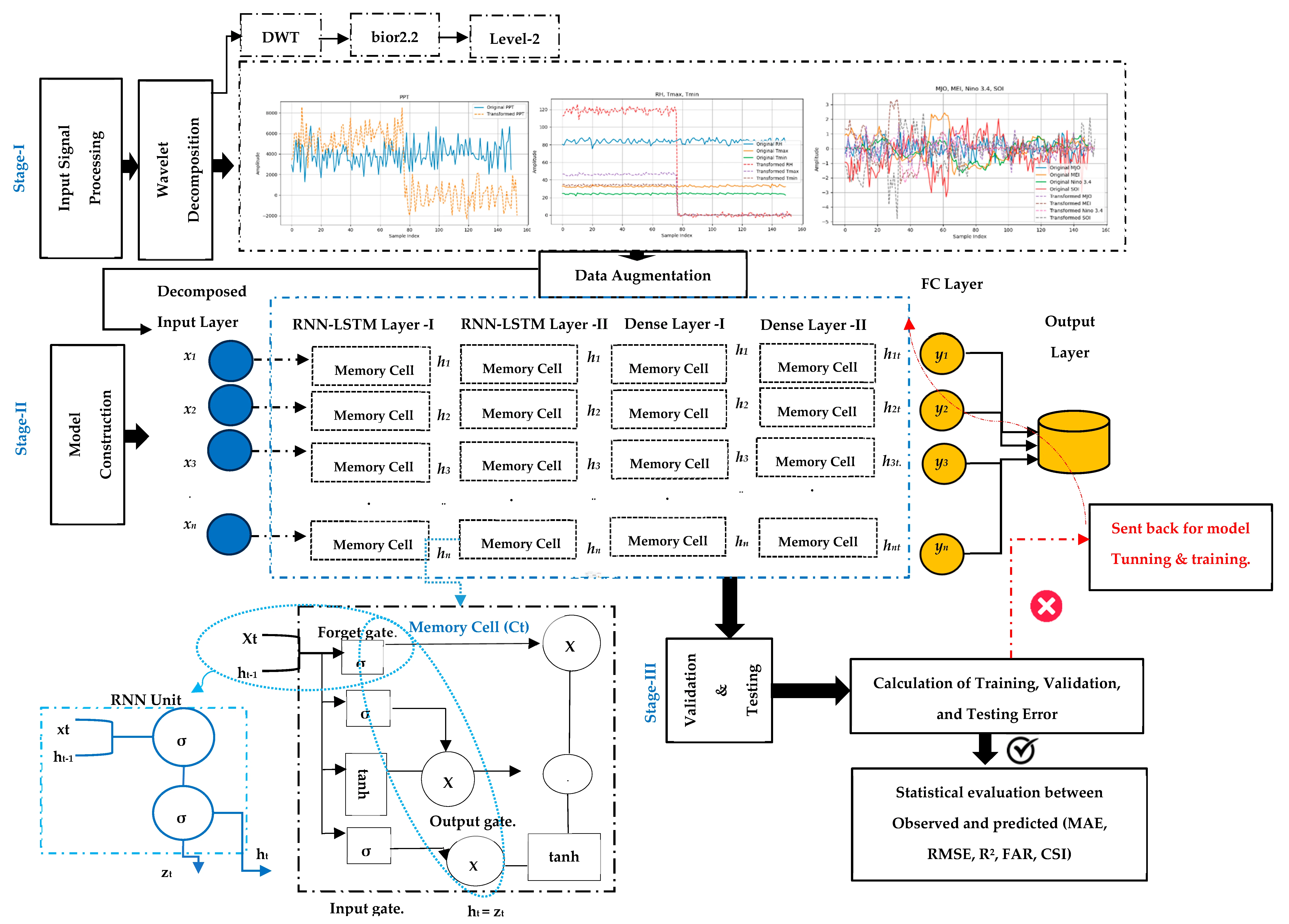
Flow diagram for Seasonal WaveNet-LSTM precipitation forecasting model
  • Use case: daily precipitation forecasting
  • Domain: tropical climate and basin-scale rainfall
  • Output: forecast-ready rainfall intelligence
Open model paper
02

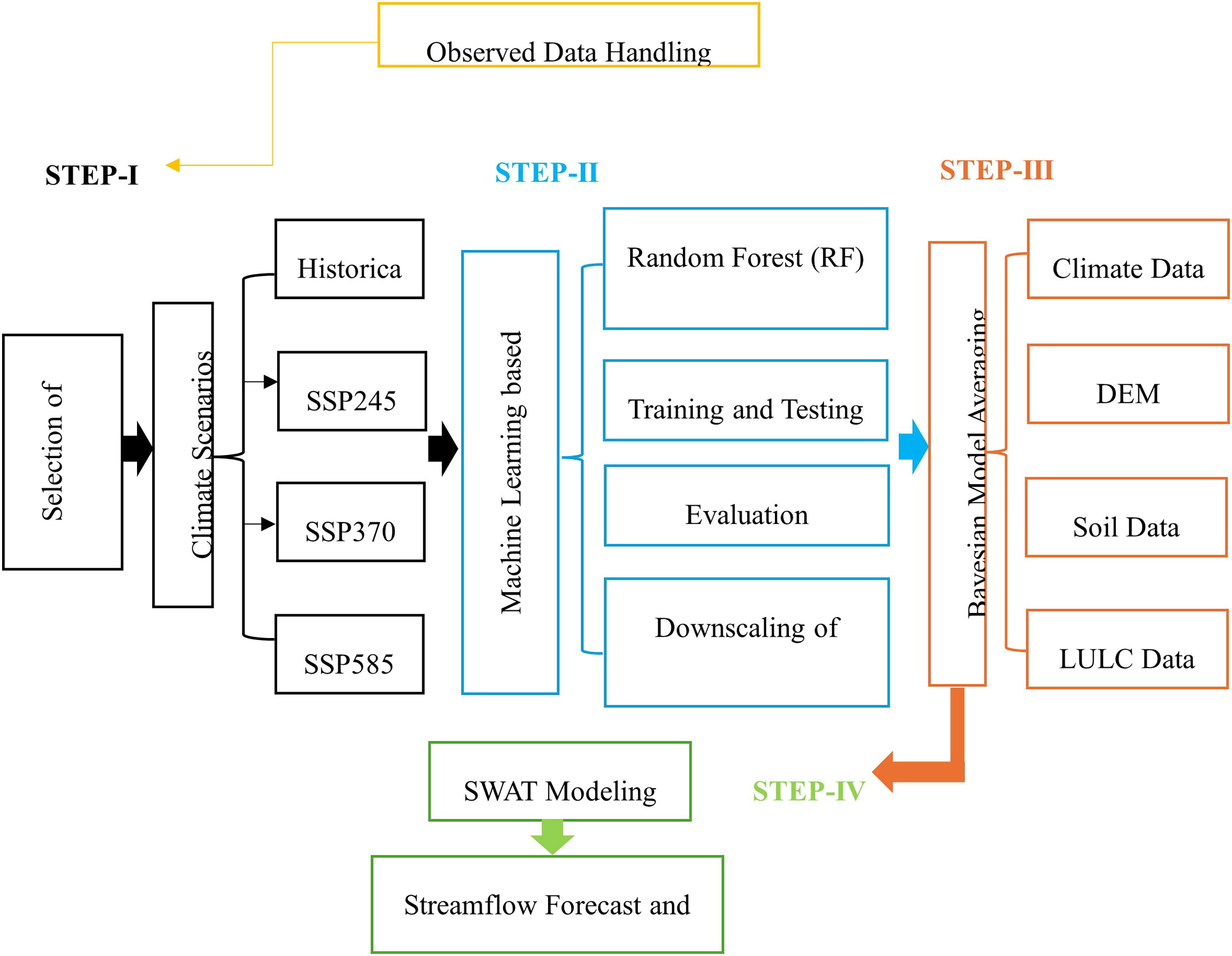
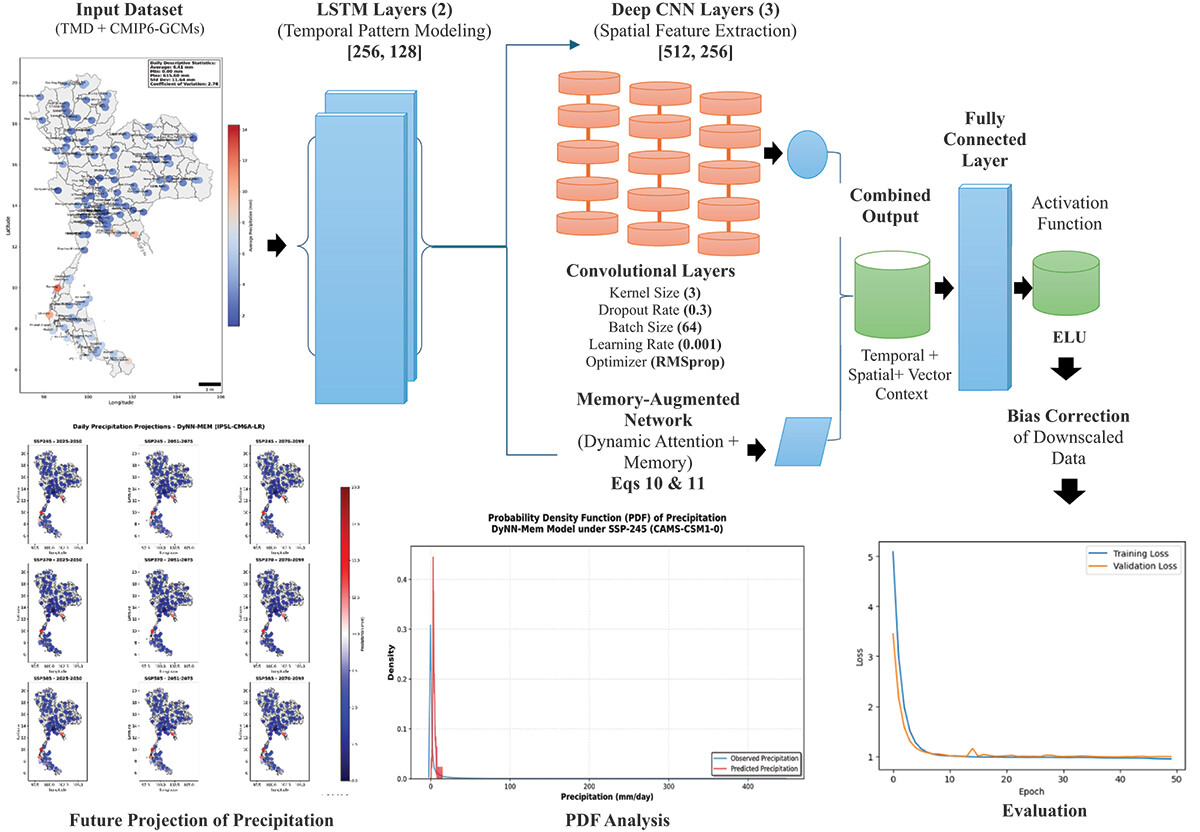
AI-Driven Precipitation Downscaling

Machine learning workflow for downscaling and projecting rainfall patterns using CMIP6 climate model data.

Flow diagram for AI-driven precipitation downscaling model
  • Use case: climate projection refinement
  • Domain: regional climate-risk analysis
  • Output: high-resolution precipitation scenarios
Open model paper
03

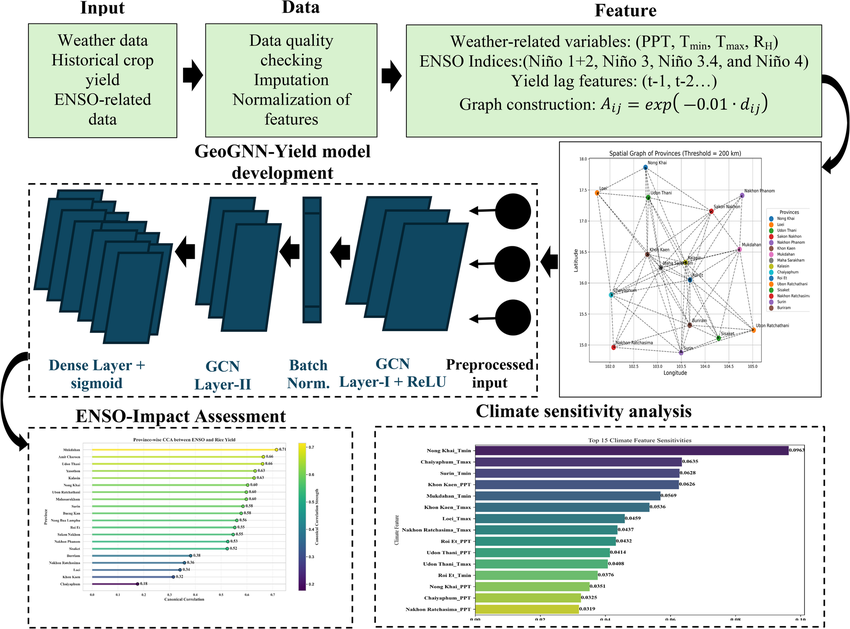
Geospatial Graph Neural Network

Graph-based climate-crop modeling framework for analyzing climate variability impacts on crop yields.

Flow diagram for geospatial graph neural network climate-crop model
  • Use case: spatial crop-yield risk
  • Domain: smart agriculture and food security
  • Output: climate-sensitive yield insight
View workflow figure
04

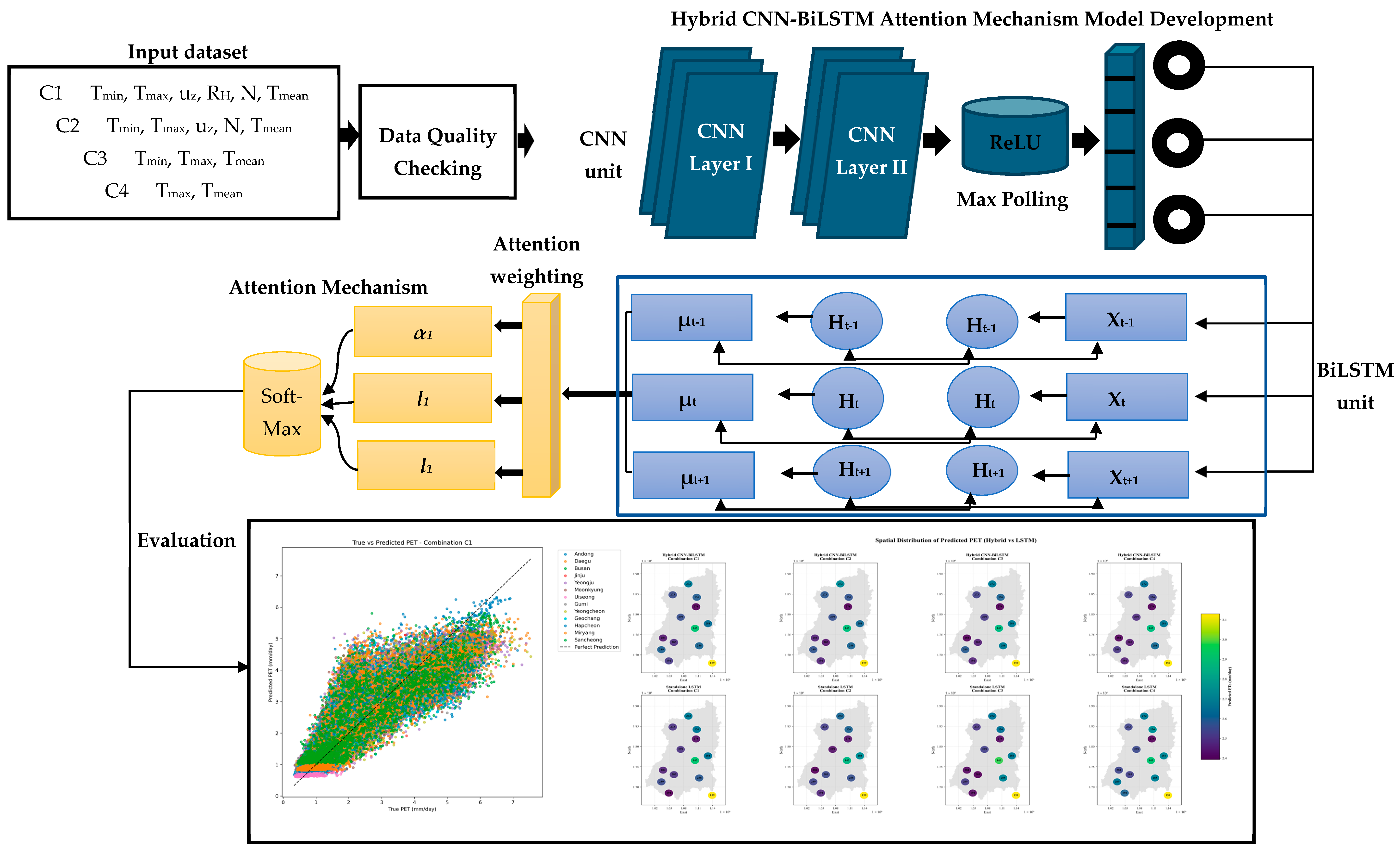
Deep Learning PET Estimation

Direct and indirect potential evapotranspiration prediction for river-basin water planning.

Flow diagram for deep learning potential evapotranspiration estimation
  • Use case: irrigation and water-demand planning
  • Domain: river-basin hydrology
  • Output: evapotranspiration prediction
Open model paper
05

River-Basin ML/DL Modeling

Machine learning and deep learning model families for hydrology, streamflow, and basin-scale environmental prediction.

Flow diagram for river-basin machine learning and deep learning modeling
  • Use case: runoff and streamflow forecasting
  • Domain: basin management and water resources
  • Output: decision-support modeling framework
Open review paper
06

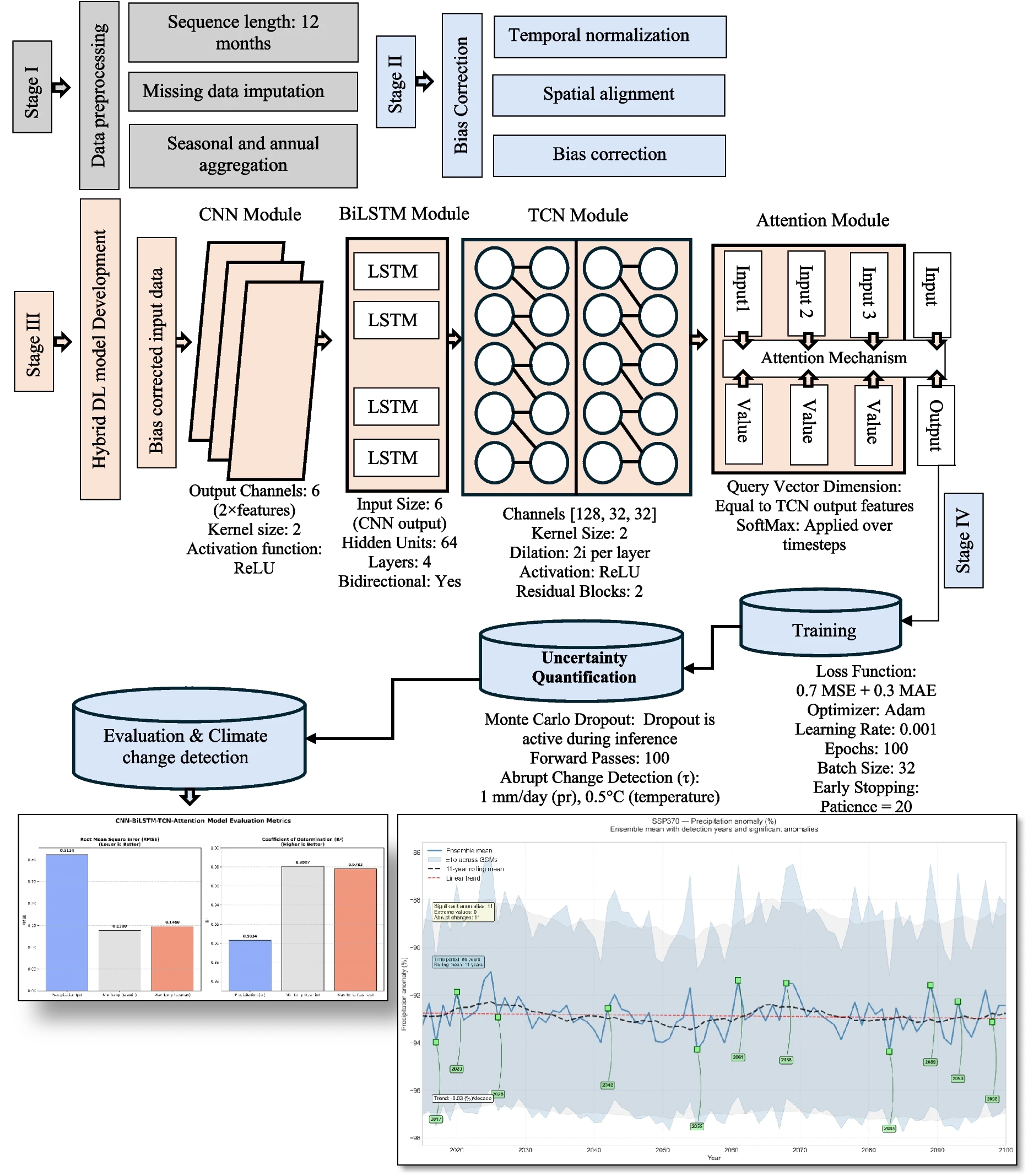
Climate Signal Detection

Hybrid deep learning and time-series trend analysis for detecting climate-change signals in precipitation and temperature records.

Flow diagram for climate signal detection model
  • Use case: climate variability assessment
  • Domain: long-term weather and climate records
  • Output: trend and signal interpretation
Open model paper

Ways collaborators can evaluate the models before a project starts.

Live System

K-WaterGuard AI dashboard

Open the deployed dashboard to inspect water-quality monitoring outputs, maps, alerts, and daily evidence generated from public API data.

Launch dashboard
Prototype Ready

Rainfall downscaling and PET calculators

For proprietary or project-specific models, collaborators can request a scoped Streamlit or Gradio prototype using their station, CMIP6, GIS, or farm datasets.

Request prototype demo
Architecture Review

Hybrid deep learning workflow diagrams

Review the model cards above for data ingestion, feature engineering, validation, and deployment logic before deciding on a technical consultation.

Discuss architecture

How the research models become usable intelligence

1

Data ingestion

Weather stations, remote sensing, CMIP6, NWP outputs, basin data, crop records, and water-quality observations.

2

Feature engineering

Climate drivers, lag variables, spatial attributes, trend indicators, and quality-controlled predictors.

3

AI modeling

LSTM, RNN variants, WaveNet, graph neural networks, machine learning, and hybrid frameworks.

4

Validation

Performance metrics, benchmark comparisons, error analysis, explainability, and scientific interpretation.

5

Decision output

Forecasts, GIS risk maps, publication figures, dashboards, reports, and climate-smart recommendations.

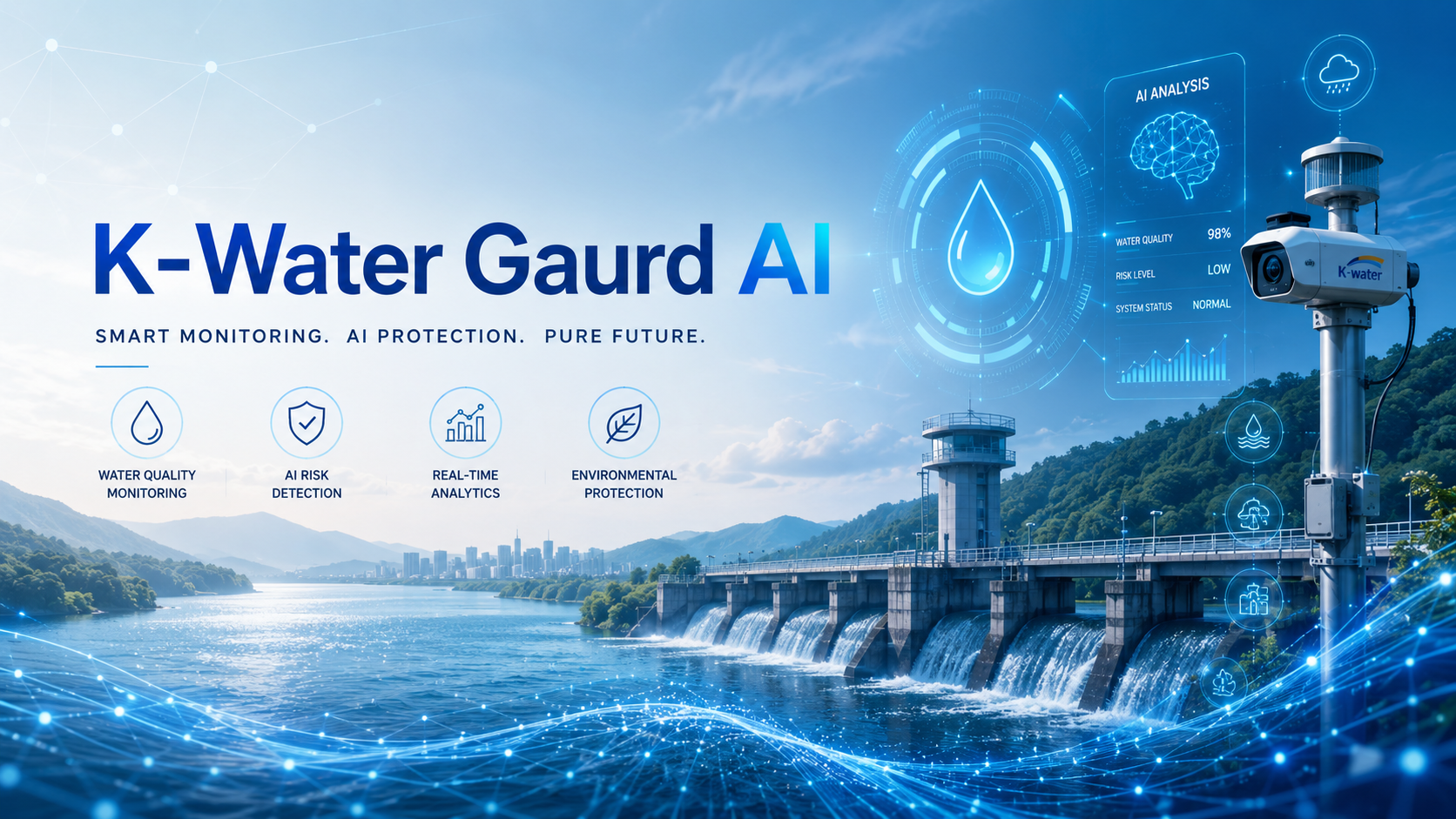
K-WaterGuard AI logo K-water visual identity

K-WaterGuard AI Agent

K-WaterGuard AI is a Python-based agentic water-quality monitoring system for South Korea. It collects public water-quality API data, stores historical records, creates plots and maps, generates an HTML dashboard, and supports optional chatbot integration through a secure backend.

API data collection CSV archive Daily outputs Spatial maps Alert thresholds Dashboard generation GitHub Pages bundle Optional chatbot
Water API Collector CSV Store Maps + Alerts Dashboard + Chatbot

Short deck-style summaries for visitors

Climate AI

Forecast rainfall, drought, and climate variability with hybrid deep learning.

Smart Agriculture

Translate climate and water data into crop-yield, irrigation, and greenhouse insights.

Water Intelligence

Monitor water-quality signals, build dashboards, and support early warning decisions.

Research Delivery

Move from datasets to model validation, publications, reports, and stakeholder-ready visuals.